“It comes from my own blood” is a useful starting point—but it does not make every platelet-based treatment interchangeable. Standard platelet-rich plasma (PRP) and EZGel platelet-rich fibrin (PRF) are both autologous, meaning the material is prepared from the patient receiving it. Their preparation and final consistency, however, lead to different roles in an aesthetic plan.
At Total Body Aesthetic in Westchester, Los Angeles 90045, patients often ask which option makes sense for under-eye hollows, cheek support, smile lines, or overall skin quality. The honest answer depends on anatomy, goals, medical history, and how much structural change is appropriate. This guide explains the practical differences before your consultation.
First, What Do PRP and PRF Have in Common?
Both begin with a small blood draw. A centrifuge separates selected blood components so the provider can prepare a platelet-rich product for treatment. Platelets contain signaling proteins commonly described as growth factors, and platelet-based procedures are used in regenerative aesthetics to support the body's normal tissue-remodeling response.
Neither option is an off-the-shelf facial cream, and neither should be chosen solely because it is “natural.” Blood collection, processing, sterility, injection technique, and patient screening all matter. The concentration and composition of the final product can also vary with the system, protocol, and individual patient.
What Standard PRP Is Designed to Do
PRP is a liquid platelet concentrate. Depending on the protocol, it may include an anticoagulant to keep the preparation from clotting before use. Its flowable texture makes it practical as a series of small injections or as a topical adjunct applied during treatments such as microneedling.
In facial aesthetics, PRP is generally discussed as a regenerative adjunct rather than a volume-building gel. A provider may use it when the principal goal involves skin quality, texture, or supporting recovery after a compatible procedure. Because it remains liquid, standard PRP does not offer the same immediate gel-like tissue support associated with EZGel PRF.
How EZGel PRF Is Different
EZGel PRF begins with platelet-rich fibrin components and uses controlled processing to create a smooth, thicker matrix. Protocols involve separating the desired blood fractions and using a specific warming and cooling sequence to form the injectable gel. The resulting material has more body than liquid PRP.
The fibrin network acts as a scaffold within the preparation. Compared with the more immediate release associated with liquid PRP, the PRF matrix can allow a slower release of platelet-derived signaling factors. Its gel-like texture may also provide temporary volume or soft-tissue support in carefully selected areas. That support is not equivalent to a guaranteed amount or duration of correction, and outcomes vary as the autologous material is remodeled.
EZGel PRF is made from components of your own blood rather than supplied as a premanufactured synthetic or hyaluronic acid filler product. That does not mean it is risk-free, permanent, or a direct substitute for every dermal filler. It is an injectable medical treatment with different handling, predictability, limitations, and candidacy considerations.
EZGel PRF vs PRP at a Glance
| Feature | EZGel PRF | Standard PRP |
|---|---|---|
| Source | Autologous; prepared from the patient's blood | Autologous; prepared from the patient's blood |
| Preparation | PRF components undergo a controlled process to create a gel-like matrix | Blood is centrifuged to concentrate platelets in plasma that remains liquid |
| Texture | Thicker, smooth, gel-like injectable | Flowable liquid |
| Fibrin structure | Organized fibrin matrix provides a scaffold | Does not have the same developed gel-like fibrin scaffold at placement |
| Release profile | Matrix can support a slower release of growth factors | Typically discussed as a more immediate liquid delivery |
| Typical aesthetic role | Subtle temporary support plus regenerative signaling in selected areas | Topical or injectable regenerative adjunct, often focused on skin quality |
| Common areas or pairings | Under-eyes, cheeks, and smile lines when anatomy is appropriate | Facial skin, scalp protocols, or adjunctive use with microneedling, depending on the plan |
Where EZGel May Fit: Under-Eyes, Cheeks, and Smile Lines
Under-eyes
The tear-trough area combines thin skin, shifting fat pads, bone structure, pigmentation, and sometimes fluid retention. For an appropriate candidate, EZGel's softer support may help soften the transition between the lower eyelid and cheek while its platelet-rich components support gradual skin-quality changes. It will not correct every cause of dark circles or under-eye bags. Patients with prominent fluid retention, certain anatomical patterns, or other medical concerns may need a different approach.
Cheeks
In the cheeks, EZGel may be considered when the goal is modest, natural-looking support rather than a highly predictable structural projection. More significant contouring may call for another option, while some patients primarily need a skin-focused treatment. Your provider should evaluate facial balance rather than treating a single fold in isolation.
Smile lines
Nasolabial folds—often called smile lines—reflect midface anatomy, movement, and changes in support over time. EZGel may soften selected lines, but aggressively filling the crease is not always the best strategy. Treatment may instead focus on neighboring cheek support or skin quality. A consultation clarifies what can reasonably be improved without overcorrection.
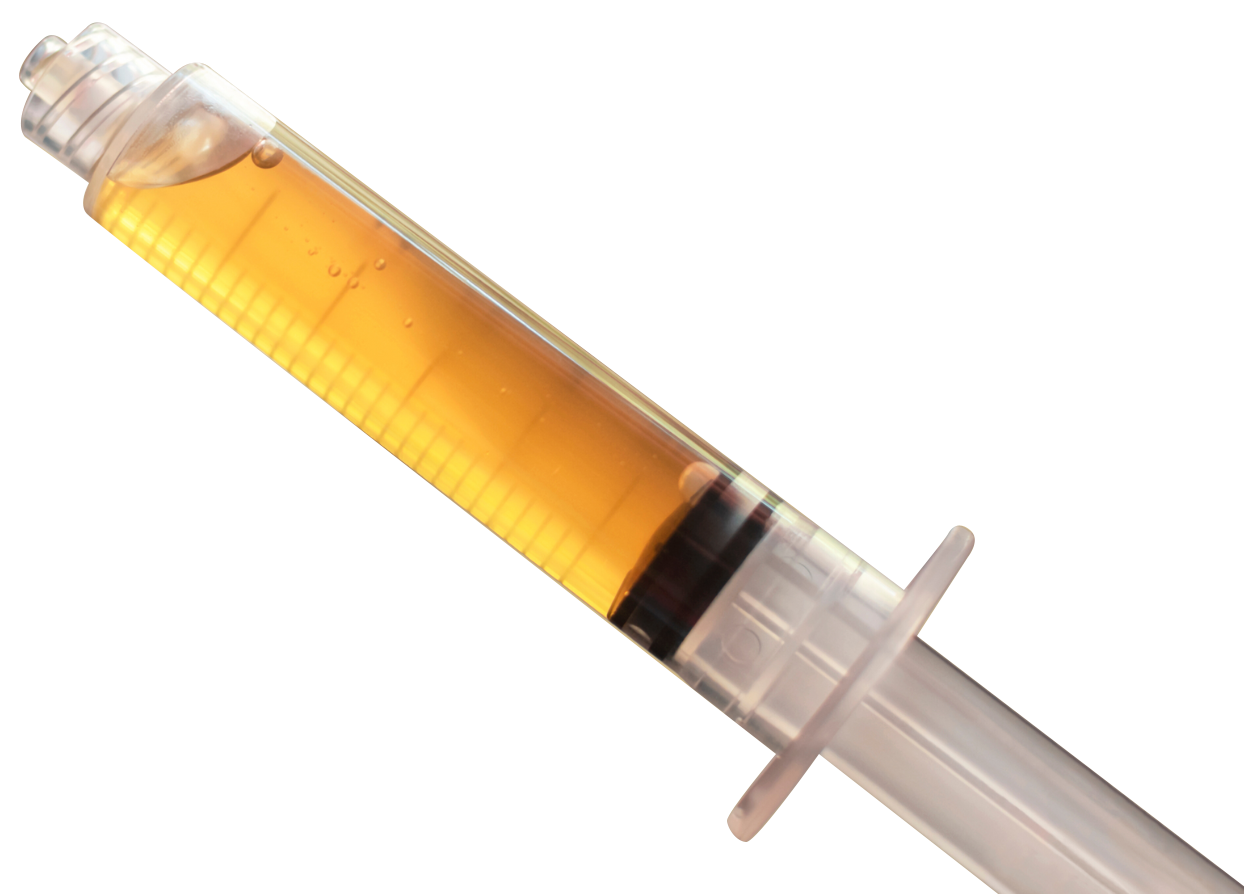
EZGel PRF uses a specific processing sequence to turn selected autologous blood components into a gel-like injectable matrix.
What a Treatment Visit Involves
A visit starts with a review of your goals, health history, medications and supplements, prior procedures, and the area to be treated. If treatment is appropriate, blood is drawn and processed in-office according to the selected protocol. The provider then places the prepared PRP or EZGel PRF based on the agreed plan.
Temporary redness, tenderness, swelling, and bruising can occur after a blood draw or injection. Under-eye swelling can be especially noticeable in some patients. Your provider will explain preparation and aftercare based on your treatment; do not stop prescribed medication unless the prescribing clinician advises it. Contact the practice promptly about unexpected or worsening symptoms.
Patient Considerations: Choosing the Right Tool
EZGel PRF may appeal to patients who prefer an autologous option and understand that the degree and longevity of support are less standardized than with conventional filler. PRP may be more suitable when the plan calls for a liquid regenerative adjunct without a gel-like volumizing role. In some plans, the treatments are not competitors at all—they address different goals.
- Your primary concern: skin texture is different from meaningful volume loss or structural contouring.
- Your anatomy: under-eye bags, fluid retention, skin thickness, and cheek support affect the recommendation.
- Your health history: blood disorders, active infection, pregnancy or breastfeeding, medications, and other conditions require review.
- Your expectations: autologous treatments generally favor subtle, evolving changes rather than a precisely predetermined fill effect.
- Your timeline: visible swelling or bruising is possible, so plan around important events.
Patients researching platelet-rich fibrin may also find our guide to PRF for eye rejuvenation helpful. An in-person assessment remains essential because a photograph or treatment trend cannot determine candidacy.
Total Body Aesthetic is in Westchester, 90045, near LAX and convenient to Playa Vista, Marina del Rey, El Segundo, Culver City, and the South Bay. Your consultation should compare PRP, EZGel PRF, and other appropriate options—not force every concern into one treatment.
Frequently Asked Questions
What is the main difference between EZGel PRF and PRP?
Both are autologous treatments prepared from a patient's own blood. Standard PRP remains liquid and is commonly used as a topical or injectable regenerative adjunct. EZGel uses platelet-rich fibrin components processed into a thicker, gel-like matrix that may provide temporary support or volume while allowing a slower release of growth factors.
Is EZGel PRF a synthetic filler?
EZGel PRF is prepared from components of the patient's own blood rather than being a premanufactured synthetic or hyaluronic acid filler product. It is still an injectable medical treatment with its own limitations, risks, and processing protocol, and it should not be assumed to behave exactly like a conventional dermal filler.
Can EZGel PRF be used under the eyes?
EZGel PRF may be considered for selected under-eye patients seeking subtle support and improvement in skin quality. The under-eye area requires careful assessment because pigmentation, fluid retention, anatomy, and the degree of hollowing can affect candidacy and the recommended treatment.
Where are EZGel PRF and PRP commonly used?
EZGel PRF is often considered for areas where a gel-like consistency and temporary support may be useful, including under-eyes, cheeks, and smile lines. Liquid PRP is commonly used as an injectable or topical adjunct for skin rejuvenation and alongside procedures such as microneedling. Recommendations depend on anatomy and treatment goals.
How do I know whether EZGel PRF or PRP is right for me?
A consultation is the best way to choose. A qualified provider should review your medical history, medications, blood-related considerations, anatomy, skin quality, degree of volume loss, and expectations before recommending EZGel PRF, PRP, another treatment, or no treatment. Outcomes and treatment plans vary.
Explore a Personalized Regenerative Aesthetic Plan
Visit Total Body Aesthetic at 8610 S Sepulveda Blvd #100, Los Angeles, CA 90045. Call (310) 670-1920 to schedule an EZGel PRF or PRP consultation. Candidacy and outcomes vary.
Book a Consultation