DRY EYE & EYE WELLNESS
If you've been fighting dry eye for years — the drops, the gels, the humidifiers — there's finally a treatment that addresses the root cause. And it won a MedTech Breakthrough Award to prove it.
By Total Body Aesthetic |
If you have dry eyes, you know the routine. The drops go in first thing in the morning — sometimes every hour throughout the day. You keep a bottle in your purse, one on your desk, one on the nightstand. You've tried every brand on the shelf. You've invested in a humidifier, maybe an air purifier. You've even downloaded a blinking reminder app.
And still — the burning, the grittiness, the blurry spells in the afternoon, the sensitivity to screens and wind and AC — it never fully goes away.
That's because for most people with dry eye, the drops aren't treating the cause. They're managing a symptom. And that's an important distinction.
At Total Body Aesthetic in Westchester, Los Angeles, we now offer Lumenis OptiLight — the first and only Intense Pulsed Light (IPL) treatment in the world to receive FDA clearance specifically for the management of dry eye disease. It was named the Best New Technology Solution for Ophthalmology at the 2022 MedTech Breakthrough Awards. And it's available right here in Los Angeles.
Lumenis OptiLight was named Best New Technology Solution for Ophthalmology by MedTech Breakthrough — an independent organization that recognizes the most innovative medical technology products and companies in the world. OptiLight beat out dozens of competing technologies to take the top spot in its category.
To understand why OptiLight works — and why drops often don't — you need to understand what's actually happening in your eyes.
Your tear film is made up of three layers: an outer oily layer, a watery middle layer, and an inner mucus layer. The oily layer is produced by the meibomian glands, which line your upper and lower eyelids. This oil — called meibum — acts as a seal that slows evaporation of your tears and keeps them stable across the surface of the eye.
When those glands become blocked, inflamed, or start to atrophy, the oily layer breaks down. Tears evaporate too quickly. The surface of the eye becomes exposed and irritated. This is called Meibomian Gland Dysfunction (MGD) — and it's responsible for approximately 86% of all dry eye cases.
Eye drops don't fix MGD. They add moisture to compensate for the evaporation. The moment they absorb or drain, you're back where you started. OptiLight targets the actual problem — the glands themselves.
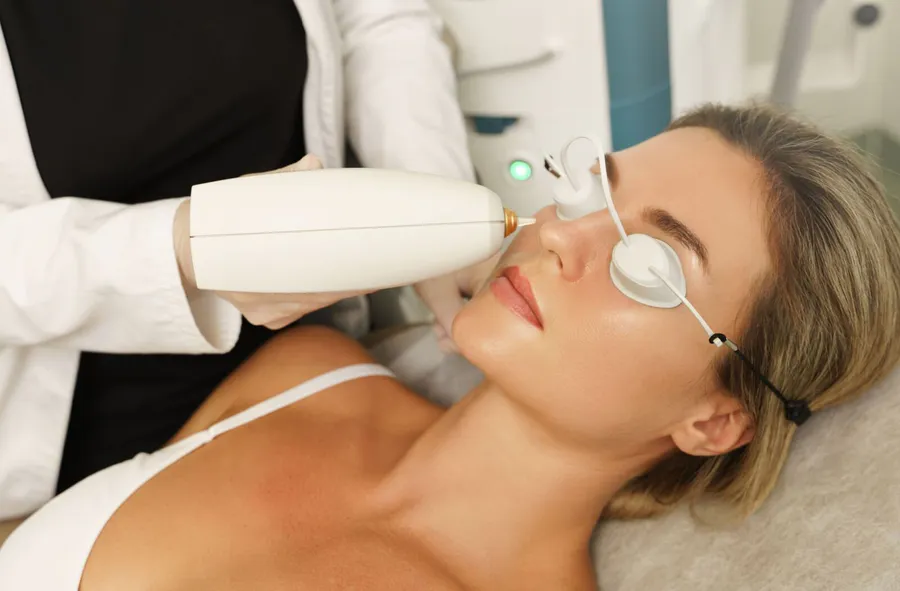
OptiLight uses Intense Pulsed Light (IPL) — a technology most people recognize from facial treatments for redness, sun damage, and rosacea — but calibrated to a lower, sub-threshold level that is specifically safe for the delicate skin around the eyelids.
The pulses of light are applied in a gentle arc from cheekbone to cheekbone, just below the lower lashes. The light energy does two things:
Following the light application, your provider will perform a gentle meibomian gland expression — a brief, manual technique that helps clear any remaining blockage and further improves gland output.
Treatment time: 10–15 minutes per session | Sessions needed: 4 (spaced 2–4 weeks apart) | Downtime: None | FDA cleared: Yes — for dry eye disease from MGD
| Treatment | Targets Root Cause? | Long-Lasting Relief? | In-Office Procedure? |
|---|---|---|---|
| Artificial Tears / Drops | No — symptom management only | Minutes to hours | No |
| Prescription Eye Drops (Restasis, Xiidra) | Partially — reduces inflammation | Ongoing with daily use | No |
| Warm Compresses | Partially — loosens meibum | Temporary | No |
| LipiFlow (thermal pulsation) | Yes — gland expression | 6–12 months | Yes |
| Lumenis OptiLight (IPL) | ✓ Yes — inflammation + MGD | ✓ 12+ months with maintenance | ✓ Yes — 4 sessions, 10–15 min each |
Each OptiLight session takes approximately 10 to 15 minutes and involves no preparation or downtime. Here's how it goes:
Here's something that surprises many patients: OptiLight doesn't just help your eyes feel better — it often makes the skin around them look better, too.
The IPL energy that reduces eyelid inflammation also targets surface-level skin concerns in the treatment zone:
Many patients finishing their four-session series notice that the skin around their eyes looks brighter, more even, and more rested — a meaningful aesthetic bonus that comes as part of treating the actual condition.
OptiLight is well-suited for patients who:
OptiLight is FDA-cleared for Fitzpatrick skin types I through IV. Patients with darker skin tones (types V and VI) may still be candidates — our providers evaluate each patient individually. Please let us know at your consultation so we can discuss the best approach for your skin.
After completing the four-session initial series, most patients experience significant relief from dry eye symptoms for 12 months or more. Studies published in peer-reviewed ophthalmology journals have shown measurable improvements in tear break-up time (TBUT), meibomian gland expressibility, and patient-reported symptom scores — with effects sustained at the 12-month follow-up mark.
Annual or semi-annual maintenance sessions help sustain results and prevent regression of gland function over time. Many of our patients build OptiLight maintenance into their regular wellness routine — alongside other treatments that support their overall health and appearance.
We're proud to be among the practices in Los Angeles offering Lumenis OptiLight to our patients. At TBA, we take dry eye seriously — not as a minor inconvenience, but as a condition that affects quality of life, screen time, sleep, and daily comfort in real, meaningful ways.
Our providers will evaluate your tear film, assess your meibomian gland function, and create a treatment plan that addresses your specific pattern of dry eye. We also offer complementary treatments that support eye and eyelid health — including dry eye nutritional support and Upneeq for upper eyelid drooping.
Located at 8610 S Sepulveda Blvd #100, Westchester, Los Angeles 90045 — near LAX, serving Playa Vista, Marina del Rey, Playa del Rey, El Segundo, and Culver City.
Schedule a dry eye consultation at Total Body Aesthetic and find out if OptiLight is right for you.
Book a ConsultationWhat is Lumenis OptiLight and what does it treat?
Lumenis OptiLight is an IPL (Intense Pulsed Light) device and the first treatment of its kind cleared by the FDA specifically for dry eye disease caused by Meibomian Gland Dysfunction. It reduces inflammation around the eyelids and restores normal function to the oil-producing glands that keep tears stable — addressing the most common root cause of dry eye symptoms.
How many OptiLight treatments do I need?
The standard initial series is 4 sessions spaced 2 to 4 weeks apart. Most patients begin noticing improvement after the second or third session. Annual maintenance treatments help sustain the results long-term.
Is OptiLight safe? Does it hurt?
OptiLight is FDA-cleared and supported by multiple peer-reviewed clinical studies. Your eyes are protected with opaque shields throughout the treatment. The sensation is a mild warm snap — similar to a small rubber band flick. There is no downtime and most patients return to normal activities immediately after.
What is Meibomian Gland Dysfunction and why does it cause dry eye?
The meibomian glands produce the oily layer of the tear film that prevents tears from evaporating too quickly. When these glands become blocked or inflamed — a condition called MGD — the protective oil layer breaks down and the eye surface dries out. MGD is the cause of approximately 86% of dry eye cases. Eye drops treat the symptom; OptiLight treats the glands.
Will OptiLight also improve the skin around my eyes?
Often, yes. The IPL energy targets pigmentation, surface redness, and fine vessels in the treatment zone — which spans from cheekbone to cheekbone. Many patients notice their skin looks brighter and more even after completing the series. It's a welcome bonus on top of the primary goal of dry eye relief.
Where can I get OptiLight in Los Angeles?
Total Body Aesthetic at 8610 S Sepulveda Blvd #100, Westchester, Los Angeles 90045 offers Lumenis OptiLight. Call us at (310) 670-1920 or book a consultation online. We serve patients from Playa Vista, Marina del Rey, El Segundo, Culver City, Playa del Rey, and the greater LA area.

2022 MedTech Breakthrough Award Winner
Best New Technology Solution for Ophthalmology