One of the most common questions we get at Total Body Aesthetic in Westchester, Los Angeles: should I be doing Botox or Emface? The answer — once you understand how each treatment works on a muscular level — is almost always: both. Not because we want to sell you more treatments, but because they work through fundamentally different mechanisms, target entirely different muscle groups, and when layered together, create a result that neither one can achieve on its own.
If you've been managing facial aging with neurotoxins alone, you're working with one hand tied behind your back. And if you've been relying on Emface without addressing the muscles that actively pull your face down, you're fighting gravity at half strength. This article explains exactly why these two treatments belong together — and how rotating them can reduce your long-term reliance on either one.
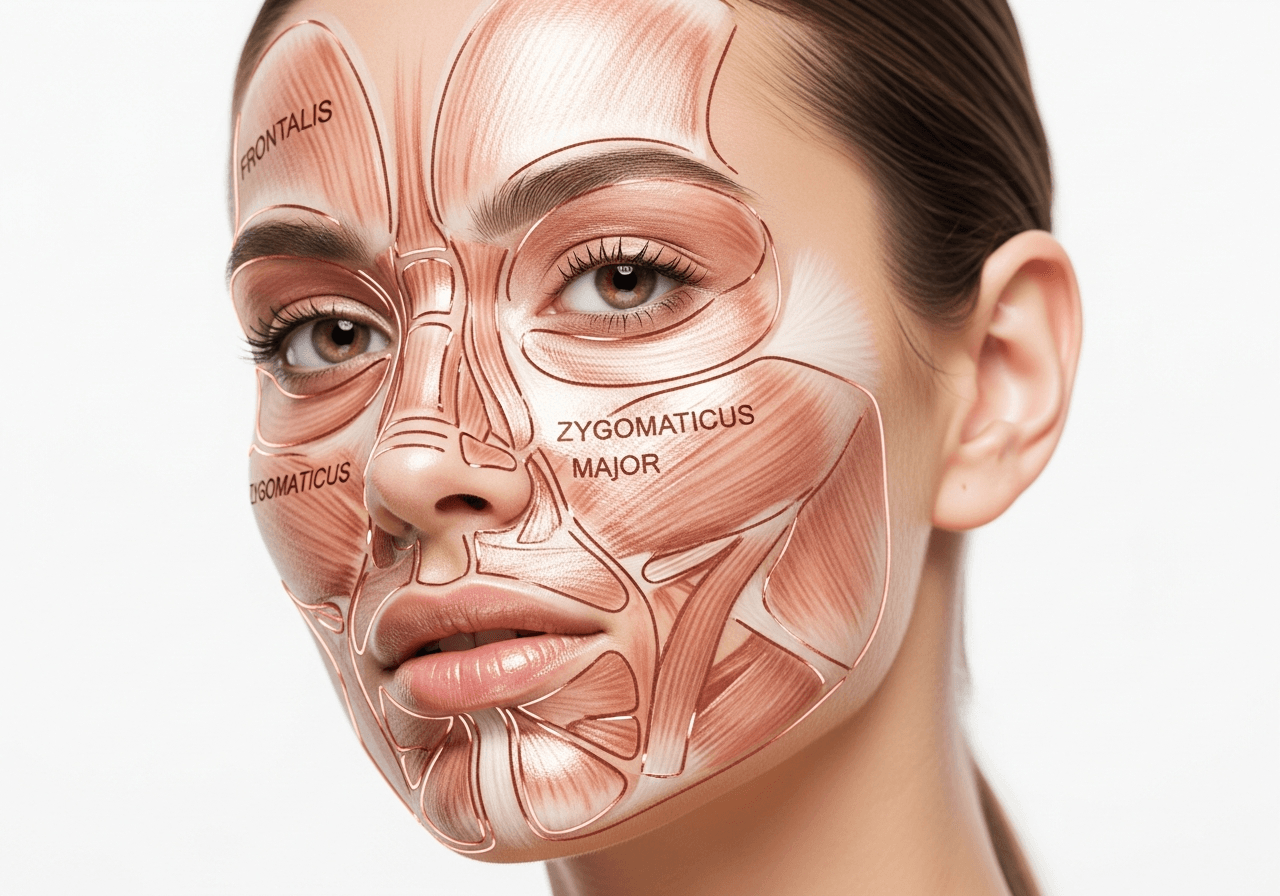
Your face is held up — and pulled down — by a network of opposing muscles. Some of them are elevators: muscles whose job is to lift the brows, cheeks, and midface into a youthful, alert position. Others are depressors: muscles that pull downward, creating lines, drooping, and the heavy, tired look we associate with age.
When you're young, the two groups are roughly balanced. The elevators are strong and dense, and the depressors don't have much gravitational advantage yet. But as we age, several things happen at once. The elevator muscles lose volume and tone — the zygomaticus, the frontalis, the risorius all weaken with time. Meanwhile, the depressor muscles maintain much of their strength, and gravity never takes a day off. The result is a slow but measurable shift in the balance of forces acting on your face — and the face gradually descends.
Most anti-aging treatments address either the skin or the volume loss (fillers). Very few address the muscular imbalance directly. Botox and Emface both do — but in completely opposite and complementary ways.
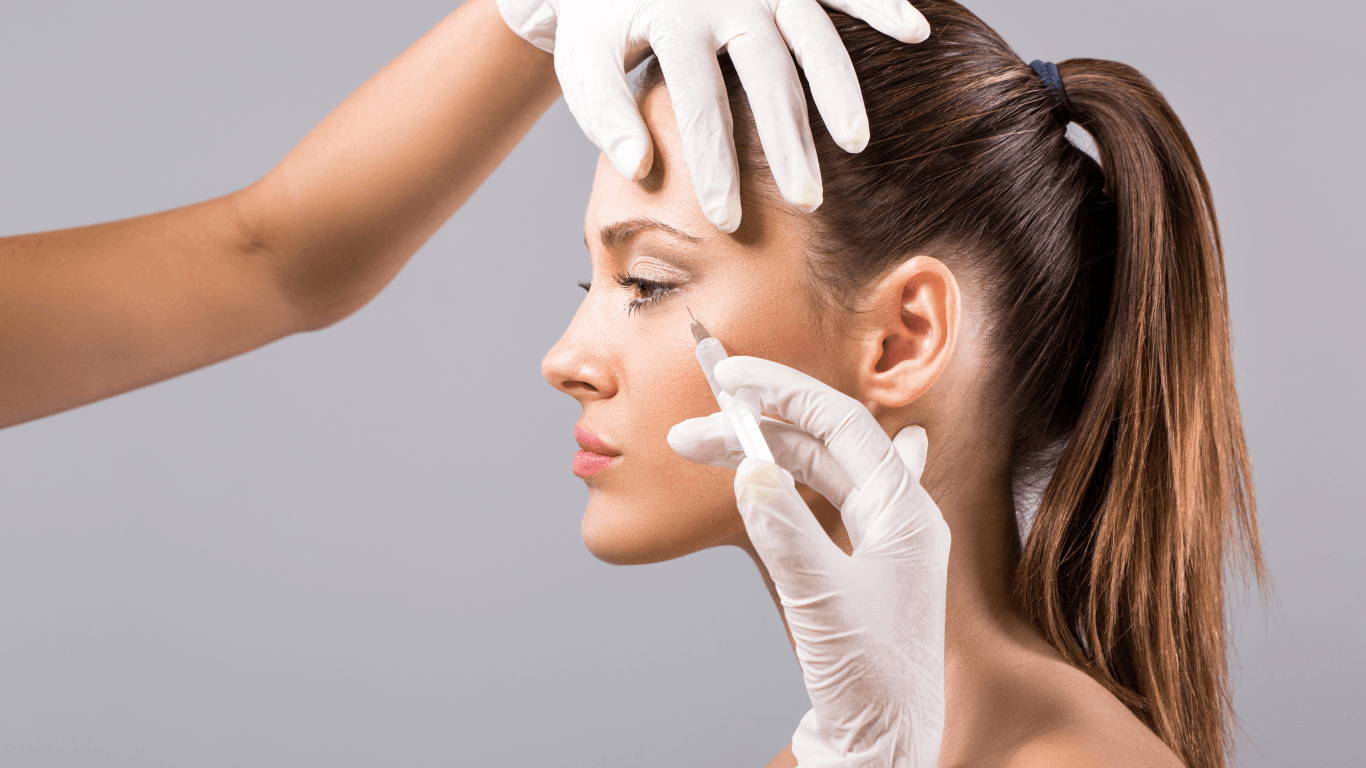
Neurotoxins like Botox, Dysport, and Xeomin work by blocking the nerve signals that tell specific muscles to contract. Applied strategically across the face, they quiet the muscles whose activity creates lines and pulls the face downward — the depressor anguli oris (which drags the mouth corners down), the depressor supercilii and corrugator (which furrow the brows), the platysma bands (which pull the lower face and neck downward), and the orbicularis oculi (whose lower fibers contribute to under-eye heaviness).
The result of relaxing these downward-pulling muscles is a face that can find its natural resting position — or something slightly above it. Brow tails lift. Mouth corners soften. The overall expression becomes more open and at ease. The "11s" disappear. The face looks rested, not worked on.
But here's the important thing to understand about Botox: it is a suppression strategy. It quiets the forces working against you. It does nothing to strengthen or rebuild the muscles that should be holding you up. Over time, if neurotoxin is your only tool, the elevator muscles continue their natural atrophy. You may find yourself needing slightly more product to achieve the same result, or treating more frequently. You are managing the descent, not reversing it.
That's where Emface changes everything.
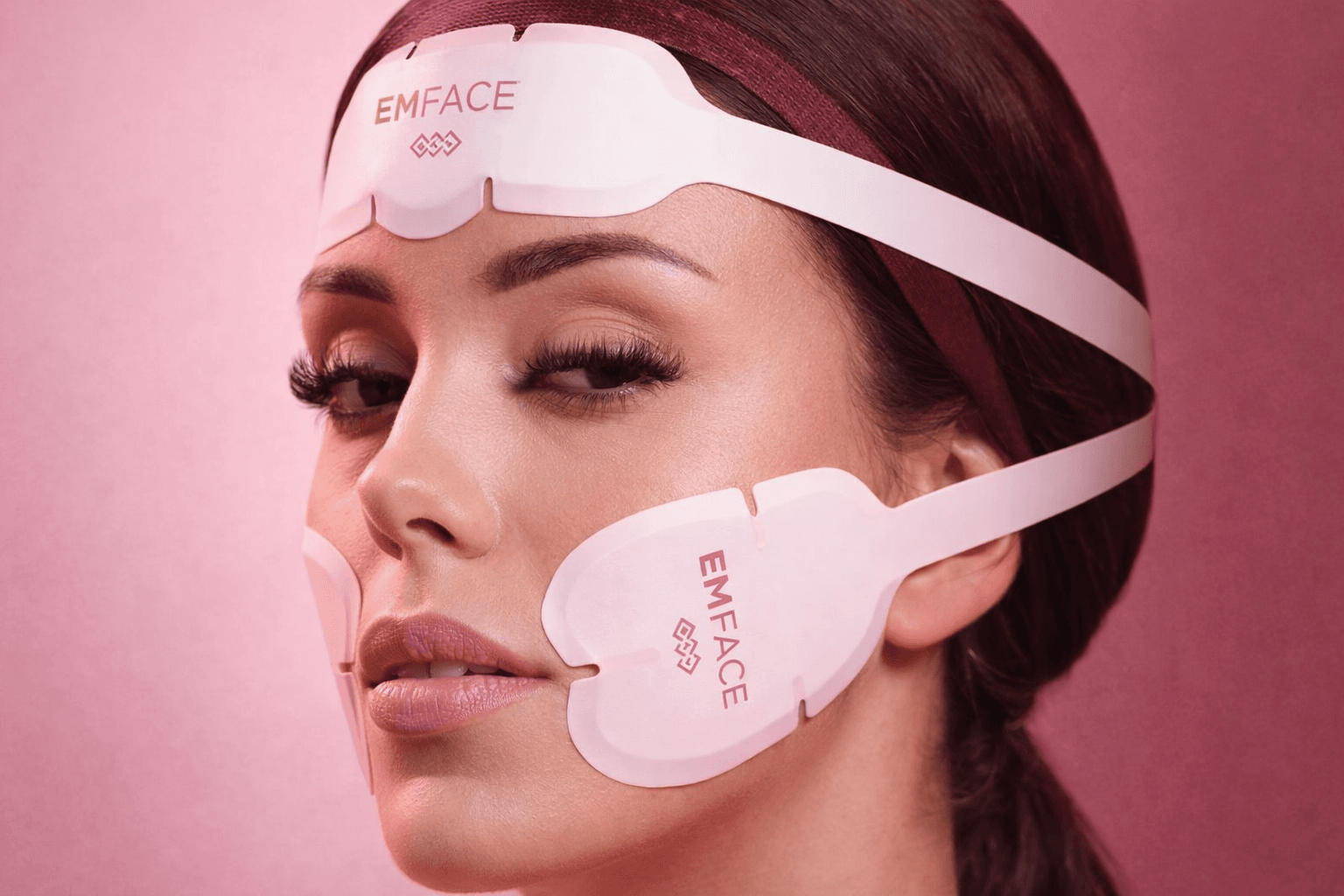
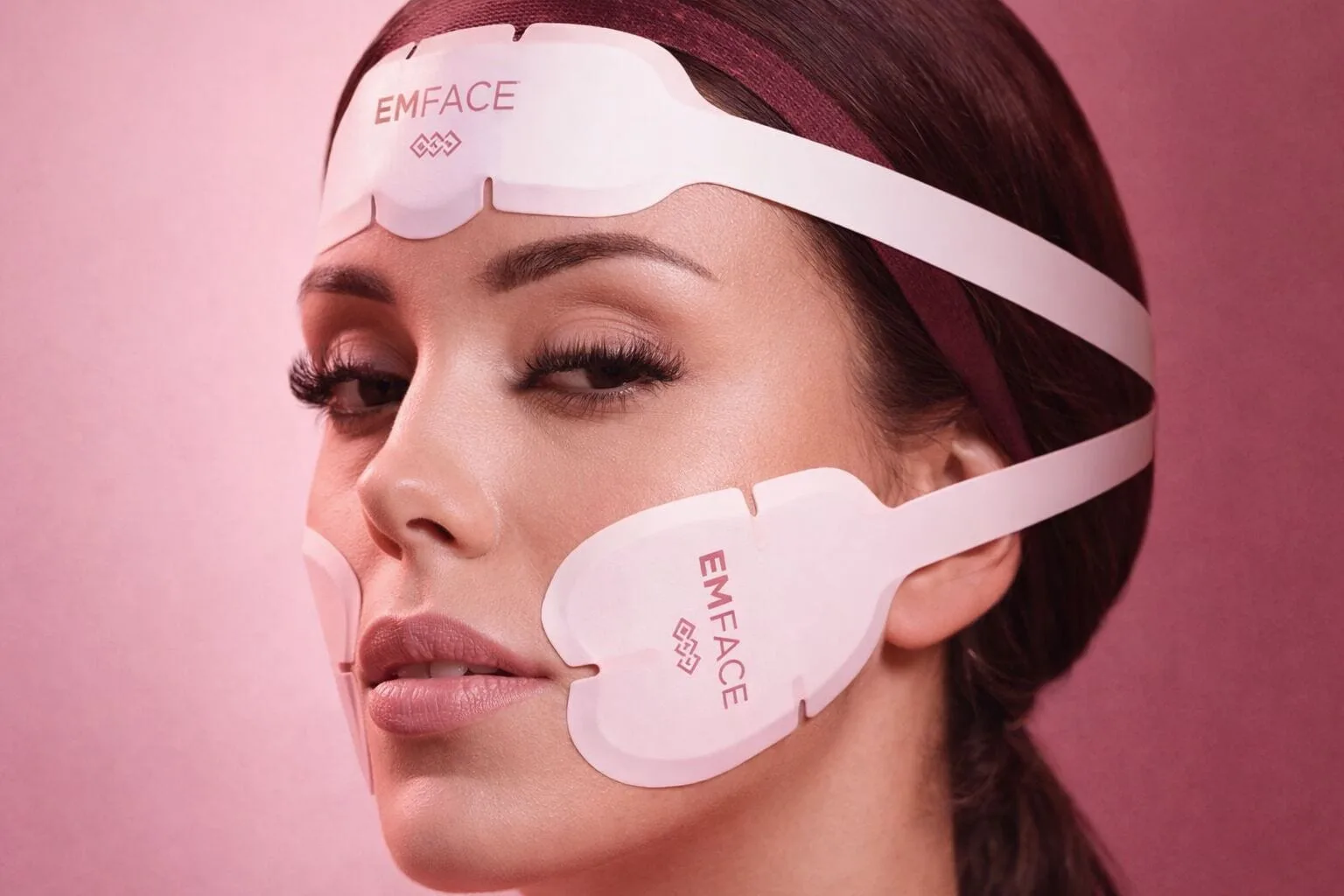
Emface uses synchronized HIFES (High-Intensity Focused Electrical Stimulation) technology to induce supramaximal contractions in the facial muscles — specifically the elevator muscles that lift the brows and midface. These contractions are far beyond what you can achieve voluntarily. Each 20-minute session produces thousands of muscle contractions that stimulate muscle fiber growth, increase density, and restore tone to muscles that have been weakening for years.
The clinical results confirm what the science predicts: Emface increases facial muscle density by an average of 25%. That 25% improvement in the elevator muscles means the face has significantly more structural lift from within — not from product, not from filler volume, but from the muscles doing the job they were designed to do when you were twenty years younger.
Simultaneously, Emface delivers synchronized radiofrequency energy to the skin and deeper tissue, stimulating collagen and elastin production. This dual action means you are rebuilding the foundation (muscle) and remodeling the surface (skin) in the same session. Results build progressively over four sessions spaced one week apart, with continued improvement in the months following the protocol as collagen remodeling matures.
The lift Emface produces is natural-looking in a way that is difficult to replicate with any other modality — because it is, quite literally, your own muscles providing the support. Patients consistently describe looking like themselves, only rested and elevated. Not altered.
When you understand the mechanism of each treatment, the synergy becomes obvious. Botox suppresses the depressor muscles. Emface strengthens the elevator muscles. Together, they address both sides of the muscular equation simultaneously — and the result is categorically more complete than either treatment can deliver on its own.
Think of it like a tug-of-war. Gravity and the depressor muscles are pulling one side of the rope. Botox quiets the depressors, reducing the downward pull. Emface strengthens the elevators, building the upward force. Combine the two, and you've meaningfully shifted the balance of that tug-of-war in your favor — naturally, sustainably, and without requiring ever-increasing amounts of product to maintain the result.
"Botox quiets the muscles pulling you down. Emface rebuilds the muscles holding you up. Together, they change the game."
Total Body Aesthetic — Los Angeles
There's another practical benefit: patients who add Emface to their routine consistently find that they need less Botox over time to achieve the same — or better — results. This is not coincidental. When your elevator muscles are stronger and more toned, the balance of forces on the face has shifted. You don't need to suppress the depressors as aggressively because the elevators are now doing more of the heavy lifting from the other side. For many patients, this translates to longer intervals between neurotoxin appointments, fewer units needed per session, and a result that feels more consistently maintained between treatments.
Emface's radiofrequency component adds a layer of benefit that Botox cannot address at all. While neurotoxin works exclusively on the neuromuscular junction, radiofrequency energy heats the dermis and subdermis, triggering a wound-healing response that increases collagen synthesis, tightens existing collagen fibers, and improves skin texture and elasticity from the inside out.
As we age, collagen production declines by approximately 1% per year after the age of 25. The cumulative effect of this loss is visible in thinner, looser, and less resilient skin. No amount of neurotoxin addresses this — it works on muscles, not collagen. Emface's RF component begins rebuilding that collagen foundation in parallel with the muscle-strengthening work, so your skin and your underlying structure are both improving simultaneously.
For patients who are also doing Morpheus8 or other RF microneedling treatments, Emface adds a surface-level complement — treating the skin without the downtime. It's an ideal maintenance treatment between deeper RF sessions, or a standalone option for patients who want skin quality improvements without any recovery period.
One of the most practical aspects of this pairing is that Botox and Emface rotate naturally into a simple, sustainable treatment calendar. Here's how we typically structure it for patients:
Emface Protocol: 4 sessions, one per week. Building muscle density and collagen as you enter the year. Followed by Botox 2–3 weeks later to address depressor muscles with the elevator foundation now strengthened.
Botox Refresh: Neurotoxin maintenance at the 3–4 month mark. Typically requiring fewer units than previous cycles. Emface results continue maturing through this quarter.
Emface Maintenance: 1–2 booster sessions to maintain and extend muscle gains. Optional Botox refresh for patients who need it, though many find this interval is no longer necessary.
Botox + Skin Prep: End-of-year neurotoxin session, often paired with a skin quality treatment (Morpheus8, VI Peel, or similar) for a fully refreshed look heading into the holiday season.
This is a template, not a prescription — every patient's needs are different, and we adjust based on how your muscles respond, how long your Botox lasts, and what your specific goals are. Some patients see such strong results from Emface that they extend their Botox intervals to every five or six months rather than four. Others prefer to keep both treatments on a consistent rotation and simply enjoy the compounding benefit.
The Botox + Emface pairing is particularly well-suited to a few patient profiles:
The longtime Botox patient who feels like results aren't lasting as long. If your Botox used to last four months and now feels like it fades faster, Emface can help reverse that trend by strengthening the elevator muscles that are supposed to be sharing the load. The combination almost always extends the effective duration of neurotoxin results.
The patient in their mid-30s to late 40s who is beginning to notice early facial descent. Brow heaviness, mild jowling, a less defined midface — these are the early signs of the muscular imbalance described above. Addressing them before they become pronounced is far more effective than trying to correct them later. Emface at this stage rebuilds and maintains muscle tone that would otherwise continue to decline.
The patient who is "Botox-curious" but hesitant about starting. Emface is an excellent entry point that works through the body's own physiological processes without any product entering the skin. Many patients begin with Emface, experience a meaningful natural lift, and then add small amounts of Botox to address specific depressor muscles — finding they need far less than they expected because the elevator side of the equation is now working properly.
The patient who wants to reduce their neurotoxin dependency. Whether for personal preference, cost management, or simply wanting a more naturally maintained result, Emface provides a path to less frequent and lower-dose Botox appointments without sacrificing the outcome.
There's a broader philosophy behind this approach that we think matters. Aesthetic medicine at its best is not about chasing symptoms — smoothing a line here, lifting a brow there — it's about understanding why the face changes and addressing the root causes of that change. The root cause of most facial aging is a combination of muscle weakening, muscle imbalance, collagen loss, and volume redistribution. Botox addresses one dimension of the muscle imbalance. Emface addresses another, while simultaneously restoring collagen. Together, they represent a genuinely comprehensive approach to facial aging from the inside out.
Add in a collagen-stimulating treatment like Morpheus8 or Sylfirm X for skin quality and tightening, and selective volume replacement with fillers where genuine volume loss has occurred, and you have a treatment plan that addresses all four root causes simultaneously. The result is a face that looks genuinely refreshed — not like it has been treated, but like you've been sleeping well, taking care of yourself, and winning at life.
That's the kind of result we build at Total Body Aesthetic. Not a single treatment, not a single solution — a thoughtful, rotating protocol built around your specific anatomy, your specific goals, and the specific biological mechanisms behind how your face is changing.
Yes — Botox and Emface can be performed in the same overall protocol, though we typically recommend spacing them slightly. If you're starting both together, we prefer to do your Emface sessions first and then add Botox two to three weeks later. This allows the neurotoxin to work alongside already-strengthened elevator muscles, maximizing the effect of both treatments from the start.
For most patients, yes. Because Emface strengthens the elevator muscles by an average of 25%, the muscular balance of the face shifts — the elevators do more of the work, meaning the depressors need to be suppressed less aggressively. Many of our patients who add Emface to their routine extend their Botox intervals from three to four months to four to six months, and often need fewer units per session.
The standard Emface protocol is four sessions, one per week. Most patients notice a visible difference starting around the second session, with the full result — including continued collagen remodeling — peaking at two to three months after the final session. Maintenance sessions of one to two treatments every six months help sustain the muscle density gains over time.
Total Body Aesthetic offers Emface in Westchester, Los Angeles at 8610 S Sepulveda Blvd #100, Los Angeles, CA 90045 — convenient for patients from Playa Vista, Marina del Rey, El Segundo, Culver City, and Inglewood. Call (310) 670-1920 or book a free consultation online.
Emface and Botox are not competing treatments — they work through different mechanisms and address different muscle groups. Botox suppresses the depressor muscles that pull the face down; Emface strengthens the elevator muscles that hold it up. The best facial lifting outcome comes from using both together, targeting the muscular equation from both sides simultaneously.
Emface is painless — patients describe a warm, pulsing sensation as the muscle stimulation and radiofrequency work simultaneously. There are no needles, no anesthesia, and no downtime. Most patients relax or even doze during the 20-minute session. You can return to all normal activities immediately after each treatment.
Schedule a consultation at Total Body Aesthetic in Westchester, Los Angeles. We'll assess your muscle balance, skin quality, and overall facial anatomy to design a combined Botox and Emface plan tailored specifically to you.
Book a Consultation