
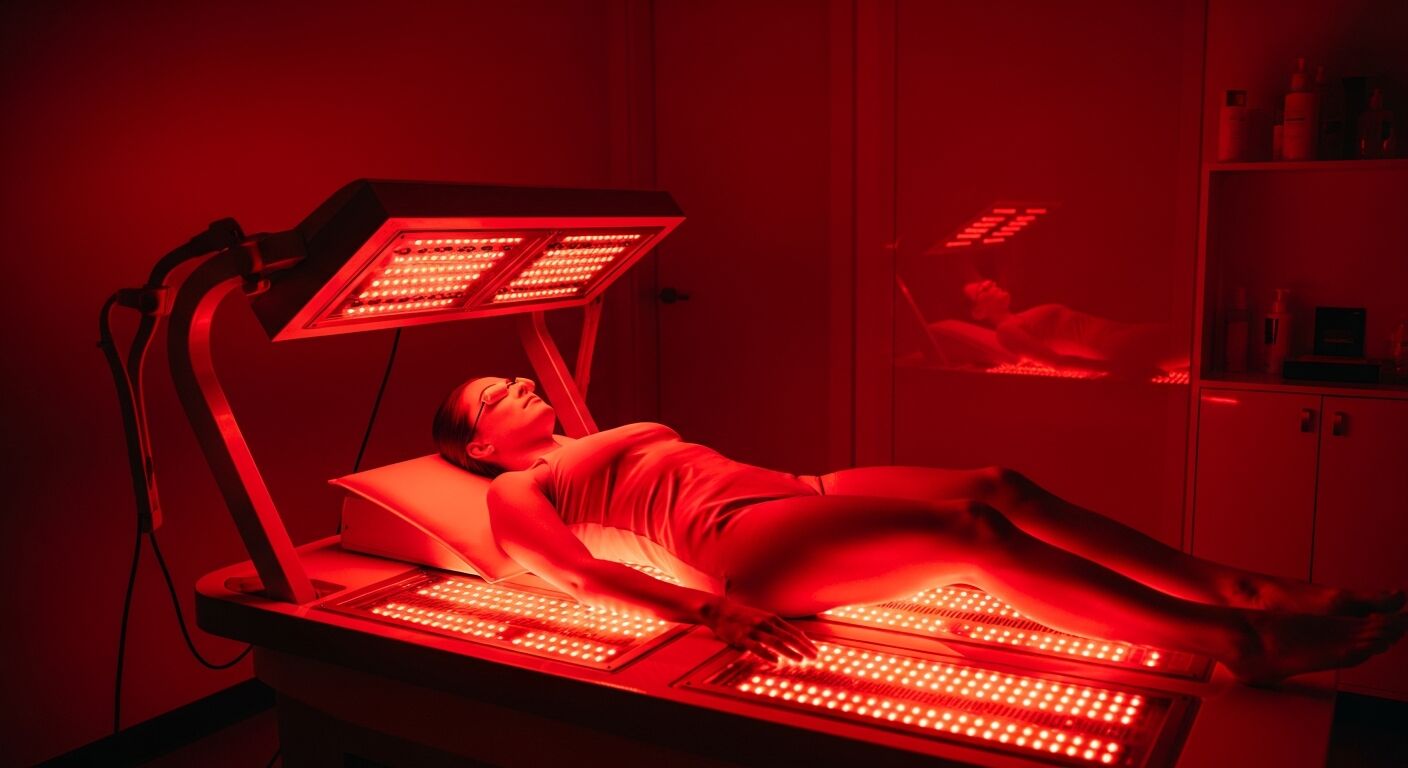
A red light mask looks convenient: put it on at home, follow the timer, repeat. A clinic session can seem like the same idea with an appointment attached. But “red light” describes a broad category, not a standardized dose or an identical outcome. At Total Body Aesthetic in Westchester, we suggest starting with the specific concern—perhaps the appearance of fine lines or overall skin quality—rather than assuming that the brighter-looking device is automatically better.
Our light therapy service is an in-office option. This guide is not a comparison of measured output for a particular retail mask versus our equipment. If you already own a mask, bring its model and instructions to a consultation so the conversation can be about actual specifications and intended use.
First, define the result you are shopping for
Photobiomodulation, sometimes called low-level light therapy, uses specified light wavelengths and exposure protocols. That does not mean all conditions advertised on social media are established uses. The American Academy of Dermatology's red light overview describes possible skin benefits but notes that research on home devices and optimal schedules is still developing. Expect a discussion of modest cosmetic change rather than a promise of wrinkle elimination, instant collagen production, systemic recovery, or a cure for fatigue.
Identify one primary goal and a way to judge it. For example, compare photographs taken in similar lighting after a reasonable period rather than interpreting one good-skin day as proof. If a spot changes shape, bleeds, or does not heal, arrange a medical skin evaluation instead of trying to treat it with light.
What is actually different?
| Question | Home mask | In-office session |
|---|---|---|
| Convenience | Use at home on the manufacturer's schedule; requires consistent self-use. | Requires travel and an appointment, with staff present to discuss use. |
| Coverage and exposure | Fit, distance, and covered areas vary by model. | Depends on the clinic device, placement, and protocol; ask for specifics. |
| Decision support | You interpret the label and screen yourself for precautions. | A consultation can review goals, history, and whether another service fits better. |
| Evidence | Check evidence for the exact model and claim. | Ask about evidence for the actual device and intended use, not “red light” generally. |
Neither format is inherently a substitute for a diagnosis. “FDA-cleared” is not the same as “FDA-approved,” and a clearance for one indicated use does not validate every marketing statement made about a device. The FDA's photobiomodulation device guidance illustrates why device testing, labeling, and indications matter. Ask which wavelength range, schedule, eye precautions, and contraindications apply to the equipment being offered; do not use a generic internet routine for a different unit.
When a mask may make sense—and when a visit helps
A home option may fit someone who values convenience, has a simple cosmetic goal, is comfortable following instructions, and understands that the evidence for a specific consumer device may be limited. Compare purchase cost and ongoing time commitment with professional visits, not just the price of one session. A mask left in a drawer is not a shortcut.
A professional visit can be helpful when your concerns overlap: redness, uneven texture, acne marks, pigmentation, or facial laxity may need different approaches. Light therapy is not interchangeable with Sylfirm X or an IPL/ResurFX skin consultation. Those procedures have different mechanisms and screening considerations. A consultation may also conclude that basic skin care and sun protection should come first.
Discuss photosensitivity, medications or products that may increase light sensitivity, active skin disease, eye conditions, and recent procedures with a qualified clinician. Follow device-specific eye protection instructions. Pause and seek care if use causes unexpected pain or a concerning reaction.
Questions worth bringing to a consultation
- What is the exact device and its labeled intended use? Is there evidence for my particular cosmetic concern?
- How many visits or uses are proposed, and how will we judge whether continuing is worthwhile?
- What should I avoid around treatment, and which side effects should prompt a call?
- Would my budget be better used on consistent sun protection or another targeted skin service?
Our photobiomodulation explainer offers additional background, but it cannot tell you whether a purchased mask or an in-office plan is appropriate for your skin. The most useful answer may be to skip both until a skin concern is identified accurately. We welcome neighbors coming from Playa Vista, Marina del Rey, El Segundo, Culver City, and the South Bay to our single Westchester location near LAX.
Frequently asked questions
Is a home red light mask the same as an in-office device?
No. Wavelengths, output, treatment distance, coverage, instructions, and intended uses differ by device. Compare the exact models rather than assuming that all red lights provide equivalent exposure.
Does FDA clearance mean a red light mask will work for everyone?
No. A device clearance applies to specific indicated uses and does not guarantee an individual result or establish that every advertised wellness claim is proven.
Should I wear eye protection during light therapy?
Follow the exact device instructions for eye safety. Ask about protective eyewear and discuss eye conditions or light sensitivity with a clinician before use.
Can light therapy replace skin care or medical treatment?
No. It should not replace sun protection, appropriate skin care, or evaluation of a changing lesion, rash, or other medical concern. A consultation can clarify whether it fits a cosmetic goal.
Talk through your options
Total Body Aesthetic · 8610 S Sepulveda Blvd #100, Los Angeles, CA 90045 (Westchester) · (310) 670-1920
Request a consultationFor general information only; not medical advice or a personal treatment recommendation. An in-person assessment is needed to discuss suitability and risks.