“Biohacking” can describe anything from consistent sleep to a high-tech wellness session. The label itself tells you nothing about whether a service works, what it costs, or who should avoid it. At a medspa, the better question is: What exactly is being claimed for this particular intervention? Feeling relaxed during an appointment, improving a measured clinical condition, and extending lifespan are three very different claims requiring very different evidence.
The NIH National Center for Complementary and Integrative Health's Know the Science tools explain how anecdotes and impressive-sounding mechanisms can mislead. A cell experiment may suggest a possible biological effect without showing that a particular device or injection improves human health. An individual story is not a controlled comparison. Ask for human studies using the same intervention, the same route of administration, and the same meaningful outcome before treating a marketing phrase as settled fact.
Translate the claim into a testable question
Suppose a service advertises “cellular energy.” Ask whether that means a laboratory marker changed, people reported feeling different, or a validated health measure improved. How many people were studied? Was there a comparison group? Was the result short-lived or followed over time? Did the research examine the exact intervention being offered, or only one ingredient in a different setting? If the answer is unclear, “promising” is a more honest word than “proven.”
| Claim you hear | Better question | What not to infer |
|---|---|---|
| “Supports cellular energy” | What human outcome improved with this route of administration? | That it treats an undiagnosed cause of fatigue. |
| “Reduces inflammation” | Which condition and measure were studied? | That it treats inflammatory disease. |
| “Five technologies work together” | Has the combined protocol been compared with its components? | That more modalities automatically improve results. |
Apply the checklist to current wellness services
Total Body Aesthetic lists services including NAD+, hydrogen therapy, and the Recharge Station. Their availability does not mean they have been proven to reverse aging, cure fatigue, treat disease, or extend lifespan. Ask which proposed benefits are supported by controlled human studies of the actual protocol and which remain uncertain. A description of an ingredient's role in the body is not clinical evidence that adding more through a wellness service improves a healthy person's outcomes.
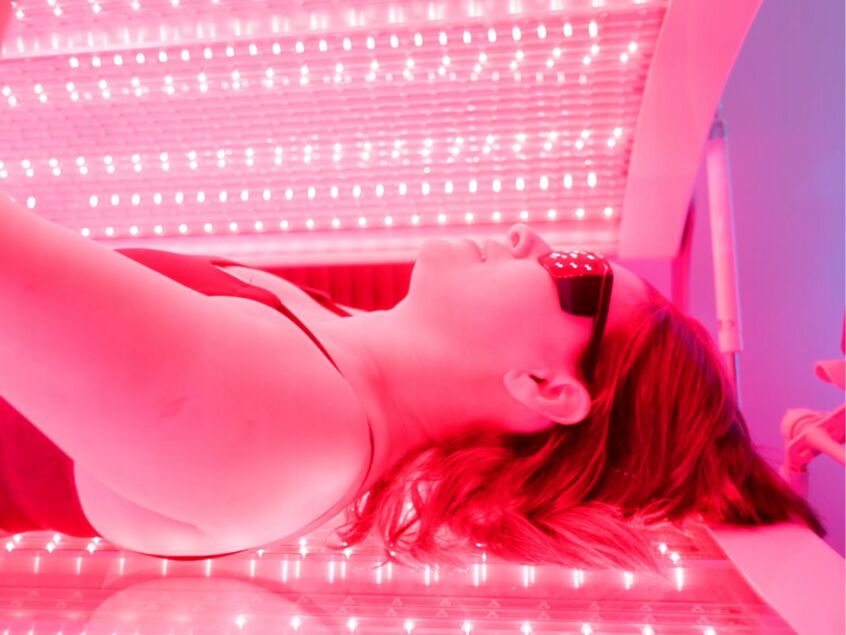
Similarly, the existence of studies on light exposure or on a single component of a multi-modality station does not establish that a combined appointment produces compounded benefits. If a claim cites a research paper, check whether the participants, dose or exposure, and outcome match the offered service. You can reasonably choose an experience because you enjoy it, while remaining clear-eyed about unproven medical claims. Ask about alternatives with a stronger evidence base for your actual goal.
Persistent fatigue, unexplained weight change, breathlessness, sleep problems, or new pain should not be relabeled “low cellular energy” by a wellness ad. See an appropriate medical professional to investigate symptoms; do not postpone indicated care to try a package of elective services.
Safety and value are part of the evidence
Even a service marketed as noninvasive has practical questions: What are the known adverse effects and contraindications? What medications, implants, pregnancy status, or medical conditions should be disclosed? Who supervises the service and handles an unexpected reaction? For an injection, ask what is administered, by which route, and what evidence pertains to that route. For a device, ask how eligibility is screened. “Natural” and “wellness” are not synonyms for risk-free.
Ask for the full out-of-pocket cost of the proposed course before agreeing, without assuming that multiple visits are essential. Decide in advance what meaningful change you hope to see, how you will measure it, and when you would stop if it does not happen. This avoids letting a package purchase determine your health story. Our related article on weight-loss biohacking stacks discusses combinations; use the same evidence questions for any bundle rather than assuming combined services have combined proof.
Our single clinic is in Westchester, Los Angeles 90045, serving people who visit from Playa Vista, Marina del Rey, El Segundo, Culver City, and the South Bay. A consultation can be a place to ask hard questions. It need not end with a purchase. Bring the exact outcome you want to discuss, your medical history, and any research you have found; we can distinguish the service experience from established medical treatment.
Frequently asked questions
Does a plausible cellular mechanism prove a wellness treatment works?
No. A proposed mechanism is a hypothesis, not proof of a meaningful health outcome in people. Ask for human research on the specific intervention, route, and outcome being advertised.
Does more technology in one session mean better results?
Not necessarily. Evidence for individual components does not establish that a combination is safer or more effective. Ask what has been studied about the actual combination and its risks.
Can NAD+ or hydrogen therapy be relied on to reverse fatigue?
No. Fatigue can have many medical causes, and these services should not be treated as a diagnosis or a proven cure. Persistent or new fatigue deserves medical evaluation.
How should I check a medspa wellness claim?
Identify the exact claimed outcome, find human studies of the same intervention, ask about harms and uncertainty, and compare it with established care. Discuss personal suitability and cost before agreeing to treatment.
Further reading: NCCIH: Know the Science. This article is informational, not medical advice or proof of a wellness service's efficacy.
Bring your questions, not just your goals
Total Body Aesthetic · 8610 S Sepulveda Blvd #100, Los Angeles, CA 90045 (Westchester) · (310) 670-1920
Request a consultation