Red light therapy and sauna therapy are both popular in the wellness world, and for good reason. Each offers its own set of documented benefits. However, combining them in a single session, particularly in a traditional sauna environment, may actually diminish the therapeutic effectiveness of photobiomodulation. This is something most consumers and even some wellness providers never consider, but from a physics and tissue-penetration standpoint, it matters significantly.
At Total Body Aesthetic in Westchester, Los Angeles, we believe in delivering light therapy the way the science supports: in controlled, dry-environment conditions with medical-grade equipment calibrated to deliver specific irradiance levels at precise wavelengths. Understanding why red light saunas may fall short of their promises can help you make better decisions about your wellness investments.
Red and near-infrared light therapy works by delivering specific wavelengths of light energy into tissue where it can be absorbed by cellular structures, particularly cytochrome c oxidase within the mitochondria. When sufficient light energy reaches target tissue at the appropriate depth, it stimulates improved mitochondrial efficiency, increased ATP production, reduced inflammatory signaling, and enhanced circulation and tissue repair. These are real, measurable biological effects documented in thousands of peer-reviewed studies.
However, all of these therapeutic benefits depend on one critical factor: how much light energy actually penetrates the tissue and reaches the cellular targets. This is where irradiance, the measure of light power delivered per unit of surface area in milliwatts per square centimeter, becomes the decisive variable. If irradiance is too low by the time light reaches the target tissue, the biological response may be minimal or inconsistent.
In a sauna environment, several physical factors interfere with effective light delivery to tissue. The most significant is surface moisture from sweat. When your skin is wet, the surface becomes more reflective, causing light hitting the skin to scatter or bounce back rather than penetrating into deeper tissue layers. From a physics standpoint, this is well-established: water on a surface changes its optical properties, increasing reflection and reducing transmission of light energy.
Beyond surface moisture, steam and humidity in the air between the light source and your skin further scatter and attenuate the light before it even reaches your body. The increased ambient heat also causes vasodilation and changes in skin blood flow that alter the tissue's optical properties. All of these factors combine to reduce the amount of therapeutic light energy that actually reaches your mitochondria, which is the entire point of photobiomodulation treatment.
It is important to understand that heat therapy and light therapy work through fundamentally different physiological mechanisms. Saunas primarily work through heat stress responses including increased circulation from vasodilation, activation of heat shock proteins, detoxification through sweating, and cardiovascular conditioning effects. Red and near-infrared light therapy works through photochemical reactions at the cellular level including direct mitochondrial stimulation and modulation of oxidative stress pathways.
When you combine intense heat with light exposure in the same session, you may be prioritizing heat-based effects while unintentionally reducing the specific photochemical stimulation that makes light therapy therapeutically valuable. You are still getting benefits from the heat, but you may not be getting the cellular-level light therapy benefits you were seeking. In wellness, combining trends does not always mean combining benefits.
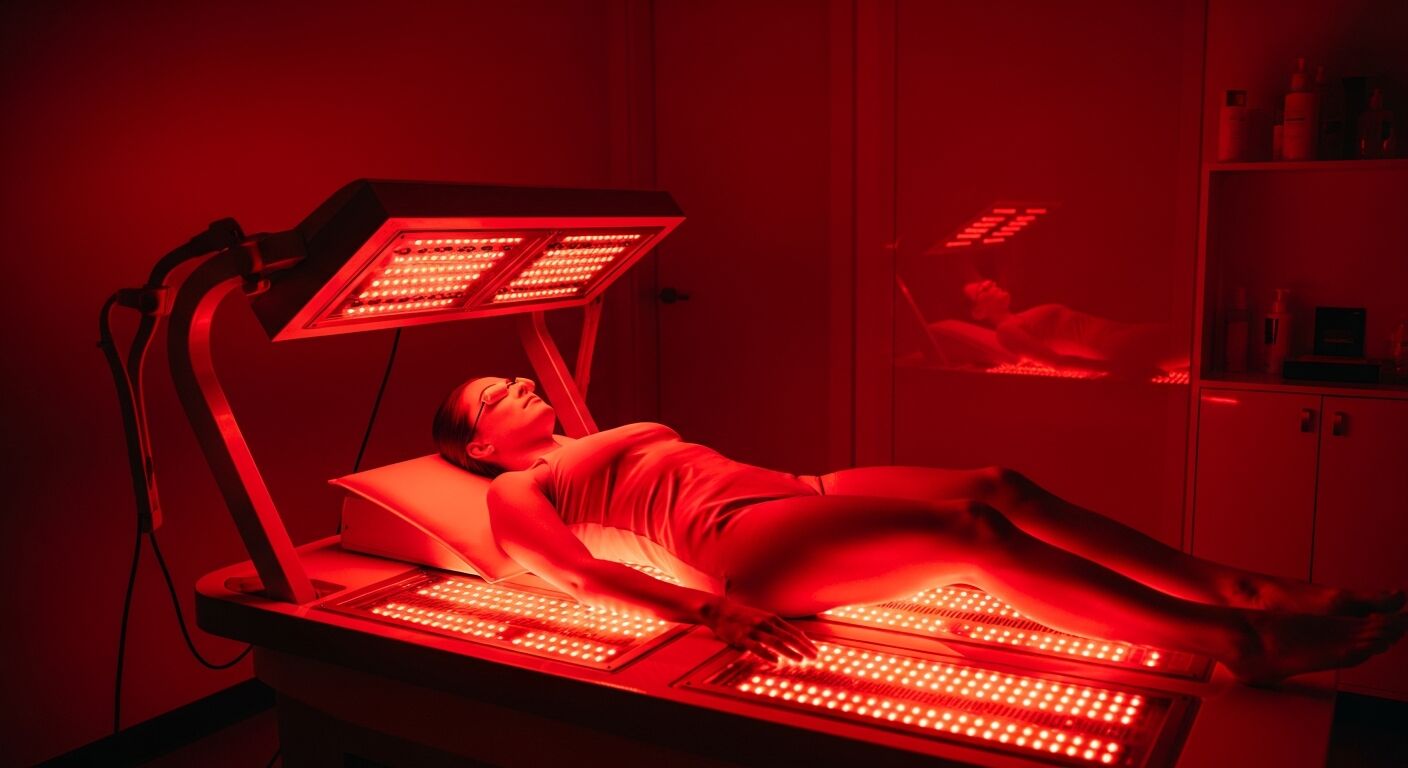
For photobiomodulation to deliver consistent, measurable results, certain conditions must be met. The skin should be clean and dry to minimize light reflection and scattering. The environment should be free of excessive humidity or steam. The device must deliver sufficient irradiance at an appropriate distance from the body. Treatment time should be calibrated to the output level of the device to deliver the correct total dose of light energy.
In clinical and medical-grade settings like Total Body Aesthetic, light therapy is delivered in controlled, dry environments at defined distances with known irradiance levels. This is one of the primary reasons why in-office photobiomodulation produces more consistent and therapeutically significant results compared to consumer setups, spa saunas, or combination heat-and-light devices. Our patients across Playa Vista, Marina del Rey, El Segundo, Culver City, and the South Bay consistently report noticeable improvements in skin quality, energy levels, and recovery after our precision light therapy sessions.
Red light saunas are not entirely without merit. They can provide relaxation, heat-based circulation benefits, stress reduction, and a general wellness experience that many people enjoy. If your primary goal is relaxation and heat therapy with some ambient light exposure, a red light sauna may serve that purpose well. However, if your primary goal is optimized cellular stimulation, tissue repair, collagen production, or targeted therapeutic photobiomodulation, a controlled light-only treatment will likely be more effective.
At Total Body Aesthetic in Westchester, Los Angeles, our Red Light+ Therapy system delivers full-spectrum photobiomodulation with ten targeted wavelengths in a controlled, dry environment optimized for maximum tissue penetration and cellular response. We serve patients throughout the 90045 zip code and surrounding communities who want real, science-backed light therapy rather than a hybrid experience that compromises both modalities. When it comes to light therapy, how you deliver it matters just as much as the light itself. Precision matters more than intensity.
Schedule a session at Total Body Aesthetic to experience medical-grade photobiomodulation in optimal conditions for real, measurable results.
Book a Consultation